
Nước ngoài, Tác giả
HARUKI MURAKAMI
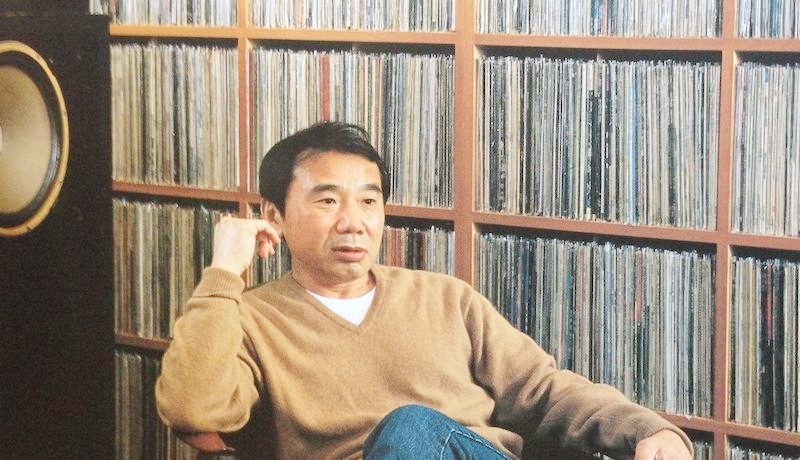
Haruki Murakami (村上 春樹, Murakami Haruki, born January 12, 1949 is a Japanese writer. His novels, essays, and short stories have been bestsellers in Japan as well as internationally, with his work translated into 50 languages and have sold millions of copies outside Japan. He has received numerous awards for his work, including the Gunzou Prize for New Writers, the World Fantasy Award, the Frank O’Connor International Short Story Award, the Franz Kafka Prize, and the Jerusalem Prize.
 Growing up in Kobe before moving to Tokyo to attend Waseda University, he published his first novel Hear the Wind Sing (1979) after working as the owner of a small jazz bar for seven years. His notable works include the novels Norwegian Wood (1987), The Wind-Up Bird Chronicle (1994–95), Kafka on the Shore (2002), and 1Q84 (2009–10), with 1Q84 ranked as the best work of Japan’s Heisei era (1989–2019) by the national newspaper Asahi Shimbun‘s survey of literary experts. His work spans genres including science fiction, fantasy, and crime fiction, and has become known for its use of magical realist elements. His official website lists Raymond Chandler, Kurt Vonnegut, and Richard Brautigan as key inspirations to his work, while Murakami himself has cited Kazuo Ishiguro, Cormac McCarthy, and Dag Solstad as his favourite currently active writers. Murakami has also published five short story collections, including his most recently published work, First Person Singular (2020), and non-fiction works including Underground (1997), inspired by personal interviews Murakami conducted with victims of the Tokyo subway sarin attack, and What I Talk About When I Talk About Running (2007), a series of personal essays about his experience as a marathon runner.
His fiction has polarized literary critics and the reading public. He has sometimes been criticised by Japan’s literary establishment as un-Japanese, leading to Murakami’s recalling that he was a “black sheep in the Japanese literary world”. Meanwhile, Murakami has been described by Gary Fisketjon, the editor of Murakami’s collection The Elephant Vanishes (1993), as a “truly extraordinary writer”, while Steven Poole of The Guardian praised Murakami as “among the world’s greatest living novelists” for his oeuvre.

Prizes for books
1979: Gunzo Award (best first novel) for Hear the Wind Sing
1982: Noma Literary Prize (best newcomer) for A Wild Sheep Chase
1985: Tanizaki Prize for Hard-Boiled Wonderland and the End of the World
1995: Yomiuri Prize (best novel) for The Wind-Up Bird Chronicle
1999: Kuwabara Takeo Prize for Underground
2006: World Fantasy Award (best novel) for Kafka on the Shore
2006: Frank O’Connor International Short Story Award for Blind Willow, Sleeping Woman
2016: Hans Christian Andersen Literature Award
2018: America Award in Literature for a lifetime contribution to international writing
2022: Prix mondial Cinco Del Duca for a lifetime of work constituting, in a literary form, a message of modern humanism
Murakami was also awarded the 2007 Kiriyama Prize for Fiction for his collection of short stories Blind Willow, Sleeping Woman, but according to the prize’s official website, Murakami “declined to accept the award for reasons of personal principle”.
More information about the author HARUKI MURAKAMI